Powder Coating
Durable, high-quality powder coating for metal surfaces of all kinds. Electrostatic application with controlled oven curing for superior performance.
Powder coating provides a durable finish superior to most paints. The electrostatic application wraps powder around edges and into recesses. Heat curing fuses the powder into a continuous film that resists chipping, scratching, and weathering better than conventional paint.
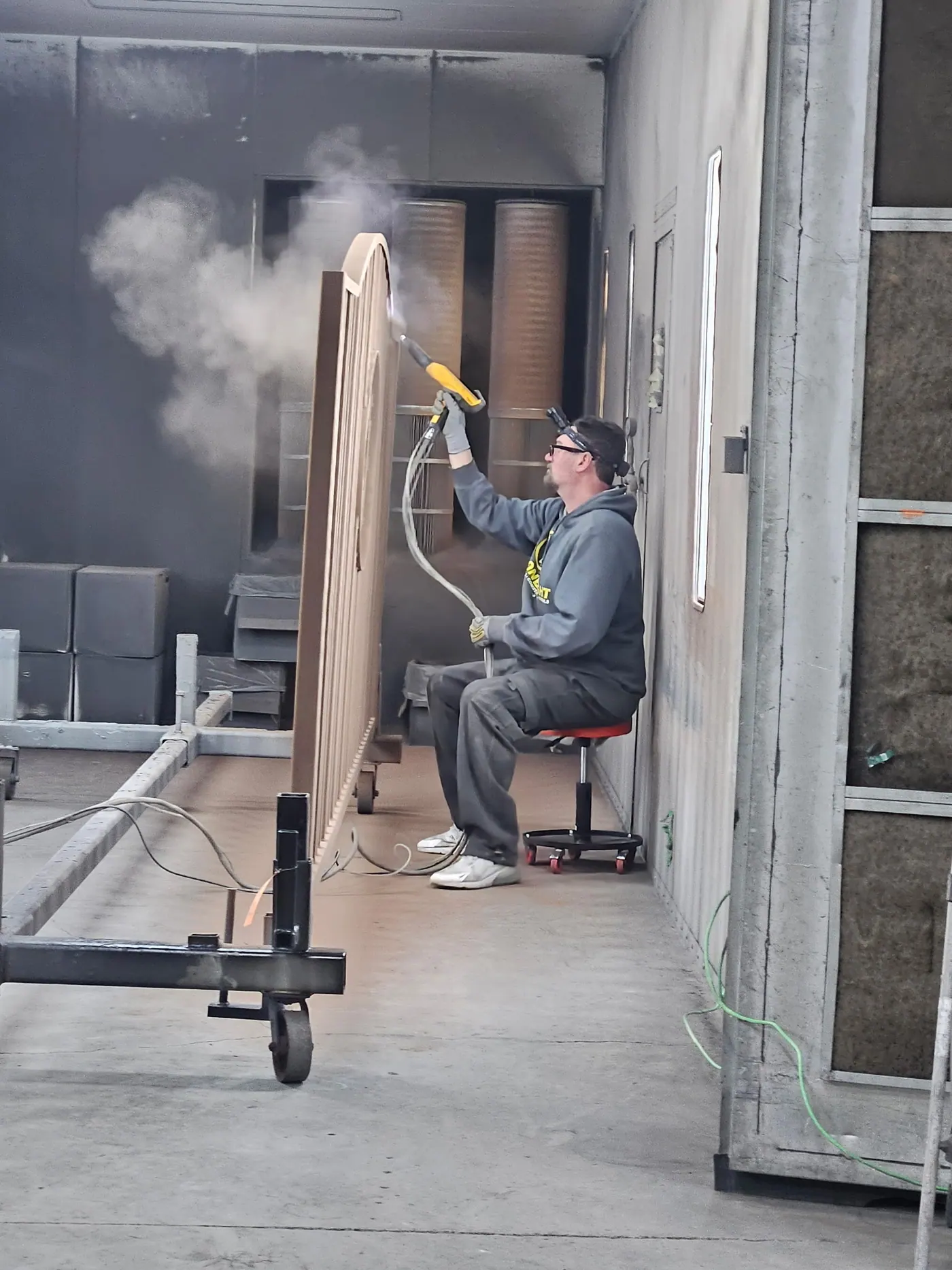
What We Do
- Electrostatic powder coating application on all metal substrates
- Standard and custom color matching (RAL, Pantone, physical samples)
- Multiple finish textures — gloss, satin, matte, textured, metallic
- Multi-coat systems including primers for maximum corrosion protection
- Large-capacity coating — items up to 26 feet in length
- Touch-up and repair coating for damaged finishes
Best Fit For
- Gates, fences, railings, and architectural metalwork
- Automotive and motorcycle frames, wheels, and parts
- Patio furniture, fire pits, and outdoor fixtures
- Industrial equipment, enclosures, and brackets
- Contractors needing coating services for their projects
- Anyone wanting a finish that outlasts paint
How We Deliver
- Incoming inspection and project assessment
- Surface preparation (sandblasting, chemical prep as needed)
- Color selection and verification
- Electrostatic powder application by experienced coaters
- Controlled oven curing at proper temperature and duration
- Quality testing — thickness measurement, adhesion testing, visual inspection
- Careful packaging and handling for pickup or delivery
What Is Powder Coating
Powder coating is a dry finishing process that uses finely ground particles of pigment and resin, electrostatically charged and sprayed onto metal surfaces. The charged particles adhere to the grounded metal, then the coated piece enters an oven where heat fuses the powder into a smooth, durable film.
Unlike wet paint, powder coating contains no solvents and releases negligible volatile organic compounds. The process is cleaner and more environmentally friendly. Overspray can be collected and reused, reducing waste.
The result is a finish more durable than most paints. Powder coating resists chipping, scratching, fading, and wearing. For items exposed to weather and daily use, this durability matters.
Surface Preparation
Powder coating is only as good as the surface beneath it. Preparation removes contaminants, mill scale, rust, and previous coatings that would prevent adhesion or cause failures. Skipping or shortcutting preparation leads to coating failures.
Sandblasting is our primary preparation method. Media propelled at high pressure removes surface contamination and creates profile — microscopic texture that improves coating adhesion. Different media and pressures suit different substrates and conditions.
Chemical preparation supplements or replaces blasting for certain applications. Phosphate conversion coatings provide additional corrosion protection and improve adhesion. Aluminum requires different preparation than steel. We match preparation method to substrate and specification.
- Sandblasting to remove scale, rust, and contamination
- Profile creation for mechanical adhesion
- Chemical conversion coatings when specified
- Substrate-specific preparation methods
- Inspection before coating application
Powder Application
Application uses electrostatic spray guns that impart positive charge to powder particles. The grounded workpiece attracts the charged powder, which adheres uniformly across surfaces, including hard-to-reach areas. The electrostatic attraction wraps powder around edges and into recesses.
Application technique affects coating quality. Gun settings, powder flow rate, distance from workpiece, and spray pattern all influence the result. Our applicators develop these skills through training and experience.
Multiple coats may be required for certain specifications or colors. Primers improve adhesion and corrosion protection on steel. Topcoats provide color and UV protection. Two-coat systems offer performance that single coats cannot match.
Curing Process
Heat transforms powder particles into continuous film. Curing occurs in controlled ovens at temperatures and durations specified for each powder chemistry. Undercuring leaves soft, weak films. Overcuring can damage color and properties.
Different powders require different cure schedules. Polyester powders typically cure at 375–400°F for 10–20 minutes at metal temperature. We maintain records of cure schedules for each powder we use.
Part size and mass affect cure time. Large, heavy parts take longer to reach cure temperature than small, thin parts. We monitor part temperature to verify adequate cure, not just oven temperature and time.
Color Options
Standard colors cover most needs. We stock popular colors for immediate use — blacks, whites, bronzes, and common architectural colors. Standard colors mean no lead time for powder procurement.
Custom colors are available for any specification. RAL numbers, Pantone matches, or physical samples can all be matched. Custom powder must be manufactured to order, which means minimum quantity requirements and lead times of one to two weeks depending on manufacturer.
Textures and effects extend beyond smooth finishes. Textured finishes hide minor surface imperfections and reduce visible fingerprints. Metallic effects add depth. Hammer-tone, wrinkle, and other specialty textures serve specific aesthetic goals.
Quality Testing
We verify coating quality through standard industry tests. Thickness measurement confirms adequate coverage. Adhesion testing confirms the coating is properly bonded to the substrate. Visual inspection confirms appearance meets standards.
Thickness is measured with electronic gauges that read coating depth without damaging the finish. We check multiple locations on each piece. Specifications typically require minimum thickness; we verify compliance.
Adhesion testing scores the coating in a crosshatch pattern, then applies and removes tape. Properly adhered coating remains intact. Poor adhesion shows lifting or peeling. We test representative pieces from each batch.
AAMA Specifications
AAMA (American Architectural Manufacturers Association) specifications define coating performance levels. These specifications are commonly referenced for architectural metalwork.
AAMA 2603 is the basic specification, suitable for mild environments with limited UV exposure. It requires polyester powder with one-year South Florida exposure testing.
AAMA 2604 requires higher performance with five-year exposure testing. AAMA 2605 requires fluoropolymer coatings with ten-year exposure testing — the highest performance level for extreme environments.
- AAMA 2603: Basic performance, one-year Florida exposure
- AAMA 2604: High performance, five-year exposure
- AAMA 2605: Superior performance, ten-year exposure with fluoropolymers
Benefits Over Wet Paint
Powder coating provides 2–3 times the thickness of liquid paint in a single coat, creating a more durable barrier. The fused film has no solvent evaporation pinholes that create weak points in paint coatings.
Environmental advantages include zero VOC emissions, recyclable overspray, and no hazardous waste from solvents. The process is cleaner for workers and the environment.
Cost efficiency comes from higher first-pass transfer rates, overspray reclaim, and reduced reject rates. While powder coating equipment costs more than spray painting equipment, the per-piece cost is often lower for production work.
Frequently Asked Questions
- How long does powder coating last?
- Properly applied powder coating on properly prepared surfaces lasts 15–20 years or more in typical conditions. UV exposure, salt air, and chemical exposure can reduce lifespan. AAMA 2605 fluoropolymer coatings offer the longest color retention.
- What materials can be powder coated?
- Any metal that can be grounded and withstand curing temperatures (375–400°F) can be powder coated. This includes steel, aluminum, stainless steel, brass, bronze, and copper. We cannot coat wood, plastic, or materials that cannot tolerate heat.
- How long does the process take?
- Turnaround depends on volume, complexity, and current workload. Simple jobs with stock colors can often be completed in 3–5 business days. Custom colors, large volumes, or complex items may take longer. We provide specific timelines at quote.
- Can damaged powder coating be repaired?
- Small chips and scratches can be touched up with matching paint. Larger damage may require partial or complete recoating. Touch-up paint does not have the same durability as factory powder coat, but protects the substrate until full refinishing is practical.
- Do you coat items other than fence and gate parts?
- Absolutely. We coat automotive parts, motorcycle frames, patio furniture, industrial equipment, light fixtures, artwork, bicycle frames, and anything else that is metal. If it fits in our oven (up to 26 feet), we can coat it.
- What is the difference between powder coating and painting?
- Powder coating uses dry powder applied electrostatically and cured with heat, creating a thicker, more durable finish than liquid paint. It has no solvents, produces no VOCs, and resists chipping and scratching significantly better than paint.
Related Services
Professional media blasting and surface preparation services. The foundation of every lasting finish starts with proper surface prep.
Custom metal fabrication — welding, cutting, forming, and repair for gates, brackets, frames, and structural components.
Strip, repair, and recoat existing metalwork to like-new condition. Furniture, railings, gates, architectural elements, and more.
Ready to Get Started?
Request a quote for your powder coating, sandblasting, or fabrication project.